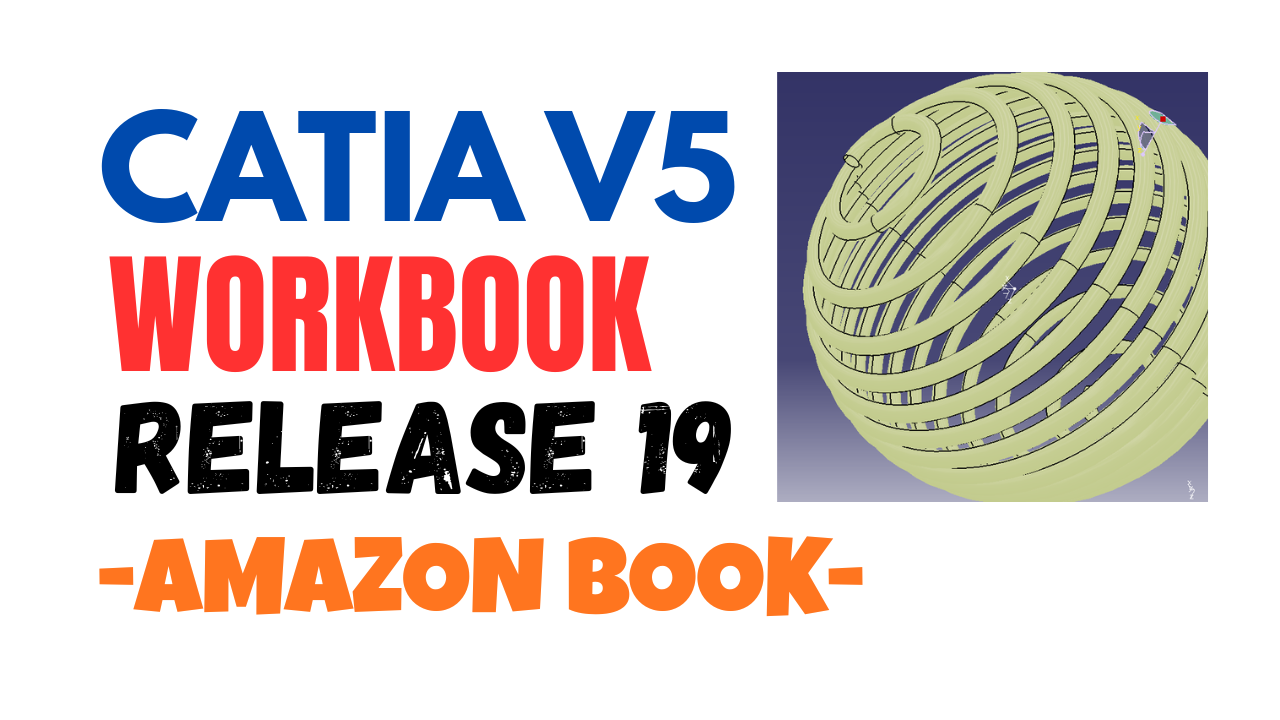
CATIA V5 Workbook Release 19 is an outstanding learning companion for anyone seeking to master CATIA V5, one of the most powerful and respected CAD systems in the engineering and manufacturing world. This book stands out because it transforms what is often seen as a complex, professional-level software into an accessible tool for students, hobbyists, and even seasoned engineers who want to reinforce or refresh their skills. Rather than overwhelming the reader with theory, the workbook combines structured exercises with step-by-step guidance, ensuring that every concept is not only understood, but also applied.

One of the book’s strongest qualities is its practical, hands-on teaching style. Many technical manuals explain features without showing how they connect to real design tasks. In contrast, this workbook invites the reader to follow along with each modeled part, sketch, and assembly. Every chapter introduces a new topic and then immediately allows the learner to practice it. This speeds up the learning process and helps users retain new skills because they are actively building models rather than passively reading instructions. This format works particularly well for visual learners who benefit from seeing the results of their actions inside CATIA.
The organization of the workbook is another highlight. The content flows logically from simple sketches and basic part modeling to more challenging features such as assemblies, constraints, drafting, and surface design concepts. Each exercise increases in complexity and builds on previous lessons, making progression feel natural rather than intimidating. New users often struggle with CATIA due to its extensive toolset, but this book minimizes confusion by focusing on essential commands first, then gradually introducing advanced features at a comfortable pace.
In addition to its teaching structure, the clarity of the instructions deserves praise. The authors have avoided vague explanations and instead provide precise steps, screenshots, and visual references. Readers never feel unsure about where to click or what to do next. This is particularly helpful for beginners who are still learning CATIA’s interface and menu navigation. The clear instructions allow learners to develop good habits early, reducing frustration and increasing confidence in their modeling skills.
Another impressive aspect of the workbook is its real-world relevance. The exercises mimic industrial situations and design approaches that professionals use daily. This connection to practical workflows gives readers a valuable advantage, especially those who intend to use CATIA in mechanical design, automotive engineering, aerospace projects, or product development. The lessons go far beyond theoretical knowledge—readers finish the book with skills they can apply immediately in internships, academic assignments, or professional environments.
In terms of readability, the book strikes a balance between technical accuracy and user-friendly communication. It avoids unnecessary jargon and maintains a tone that is both encouraging and professional. Even readers who have never used a 3D modeling program before can follow along and make noticeable progress within the first few chapters.
Overall, CATIA V5 Workbook Release 19 is more than just a reference manual—it is a complete learning system. It not only teaches readers how to use CATIA’s tools, but also how to think like a designer, plan models carefully, and produce results that meet engineering standards. Whether you are a student entering the world of CAD, a professional expanding your software skills, or a teacher looking for a reliable curriculum resource, this workbook is an excellent investment.
Its practical exercises, clear explanations, and logical progression make it one of the best guides available for mastering CATIA V5. By the time you complete the workbook, you will understand the software with confidence and be ready to tackle your own design challenges independently.